
Roy Campos: “The future caught up with us, and we haven’t seen anything yet”
The president of MITOFSKY Group on artificial intelligence, fake polls, social media and the largest midterm election in Mexico's history.
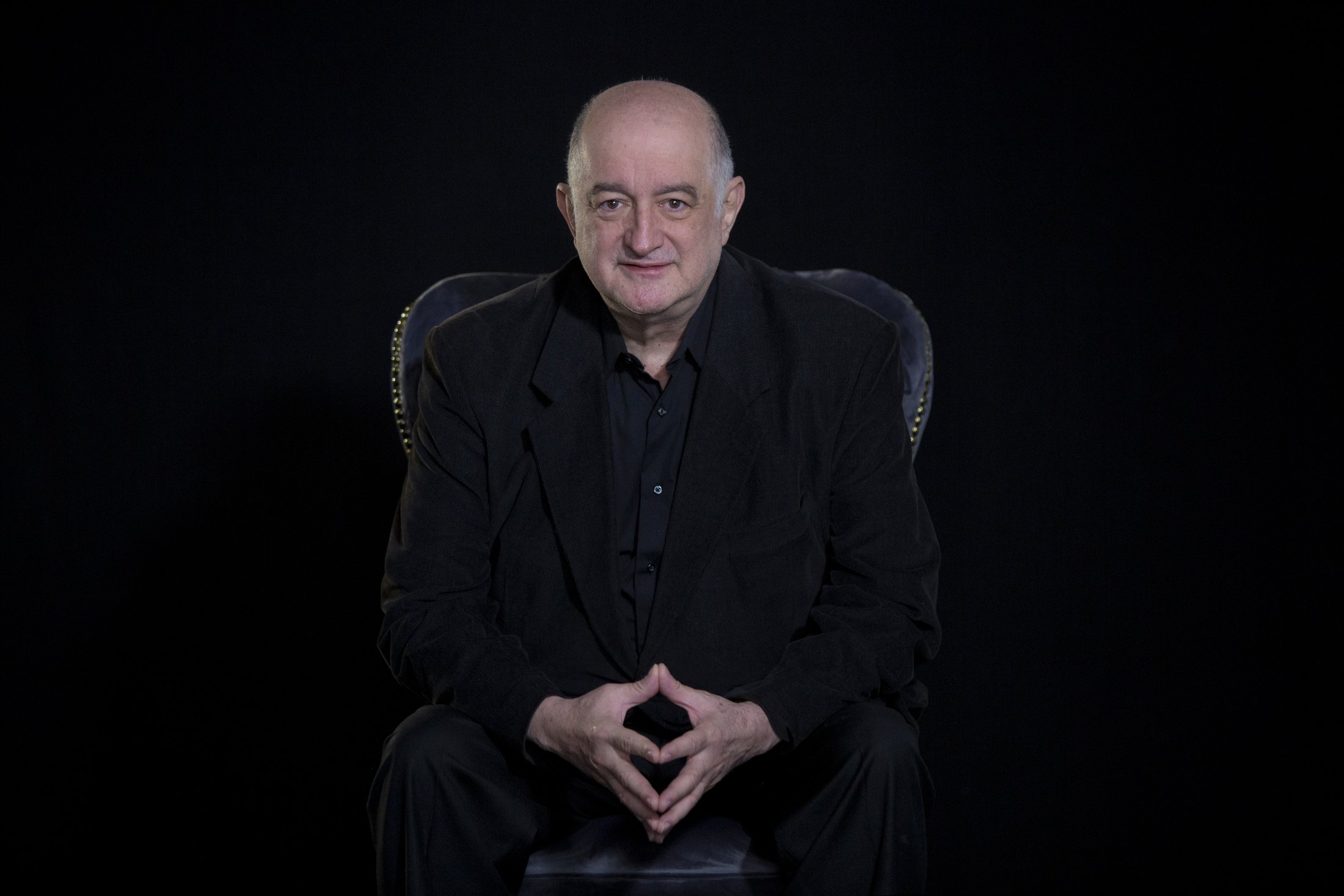
PDF edition →Roy Campos Esquerra Roy Campos Esquerra has been measuring Mexico for more than four decades. An actuary with a master's in Statistics from UNAM, he directed surveys at INEGI, has worked on quick counts and exit polls since 1989 and, in the mid-1990s, founded the firm now known as MITOFSKY Group, named after Warren Mitofsky, the creator of the exit poll. He has served as president of the Latin American Association of Political Consultants (ALACOP) and has received, among other honors, Mexico's José Pagés Llergo National Communication Award and recognition from the international political consulting industry.
In his 2025 year-end review he wrote that artificial intelligence stopped being a novelty and became “cultural infrastructure.” In January he listed AI among the nine topics on Mexico's 2026 agenda and, in September, named it alongside social media, organized crime and traditional media as forces that will shape 2027. FOCUS spoke with him about what lies ahead.
In December you wrote that AI went from novelty to “cultural infrastructure.” What changed?
Between 2023 and 2024 artificial intelligence was a curiosity, something for specialists. In 2025 it was already at work, at school and in propaganda. The question is no longer what AI is, but who controls it, what it is used for and how it affects jobs and public opinion. That is the debate in front of us.
How far can it go?
Its impact may be greater than that of the industrial revolution or the internet. The pandemic accelerated it, and every month it enters a new area of life. The future caught up with us and we haven't seen anything yet. And I'd add this: anyone who thinks they understand how far AI will go doesn't understand anything.
You call 2027 “the largest midterm in our history.” Where should we be looking?
We are talking about roughly 20,000 posts, 17 governorships and perhaps 10,000 to 15,000 candidacies. We have to watch what social media, artificial intelligence, organized crime and traditional media do. And we should ask for livelier debates, active moderators, transparency in funding and respect for electoral authorities and results.
Do social media — and now AI — win elections?
I see it as air power versus artillery. From the air you attack with media, social networks, leaks and scandals; on the ground you defend with structure and programs. Air power can weaken the opponent, but it doesn't occupy cities. A viral scandal can create noise, but not necessarily votes: the vote still happens on the ground.
«Air power can weaken the opponent, but it doesn't occupy cities.»
Before 2024 you warned there would be “many fake polls.” Does AI make that worse?
We saw it in 2024: fake polls, biased readings of real ones and parties using polls as propaganda. That distorts voters' perceptions. With artificial intelligence the risk grows, because today fabricating a professional-looking poll — charts, methodology box, logo — takes minutes. And some already talk about “synthetic respondents,” models that answer as if they were citizens. They can help test a questionnaire, never to measure: a simulated opinion is not public opinion. That is why the defense is transparency: who paid, how it was fielded, how many were interviewed and when. Polls are useful for almost everything — understanding segments, messages and trends — except predicting the winner.
How does technology change the pollster's craft?
Technology forced the industry to evolve: there was a time with no internet and no cell phones. Since 2017 we began innovating with online studies in Mexico, Central America and the Caribbean. Today artificial intelligence helps us with what used to take hours: reviewing questionnaires, cleaning databases, coding open-ended answers, finding patterns and preparing reports. But some things cannot be delegated: sample design, question wording and interpretation. The machine processes; judgment is still human. The smart consultant is not obsessed with who is ahead, but with segments and messages.
What should be regulated before 2027?
Three things are urgent. First, all political content made with artificial intelligence should say so clearly: if a video or an audio clip is not real, citizens have the right to know. Second, clear rules against candidate deepfakes, with fast takedowns and penalties for those who knowingly spread them. And third, enforce the rules that already exist for publishing polls: full methodology filed with INE and sanctions for anyone who publishes invented studies. This is not about banning technology, but about not using it to deceive. INE has to reach 2027 with these rules settled, not improvise them halfway through the campaign.
One piece of advice for consultants running campaigns in 2027.
The 2027 election will be long. You have to build your own narrative instead of reacting, and not confuse noise with votes. Use artificial intelligence to listen better, not to shout louder: to understand what worries each segment, test messages and respond quickly. But don't use it to invent or deceive, because credibility lost is not regained in one campaign. And don't forget the basics: elections are won on the ground, with structure and proposals. Technology helps you reach people; what persuades is still the candidate.
«A viral scandal can create noise, but not necessarily votes.»
 FOCUS courtesy space
 Polls · Quick counts · Public opinionThree decades measuring what Mexico thinks.World leaders approval ranking, governors' ratings, exit polls and tailor-made studies.mitofsky.mx →
